




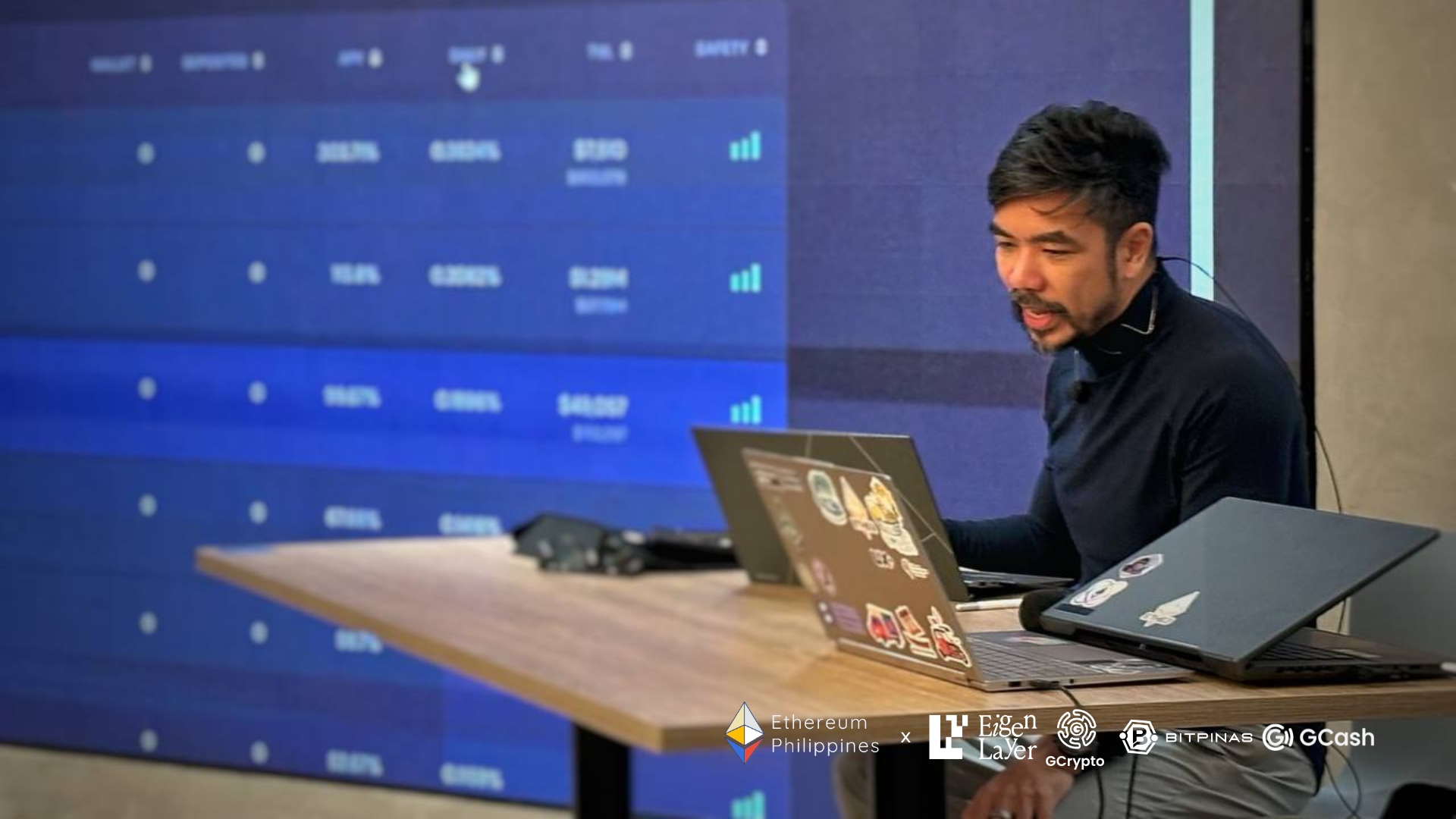
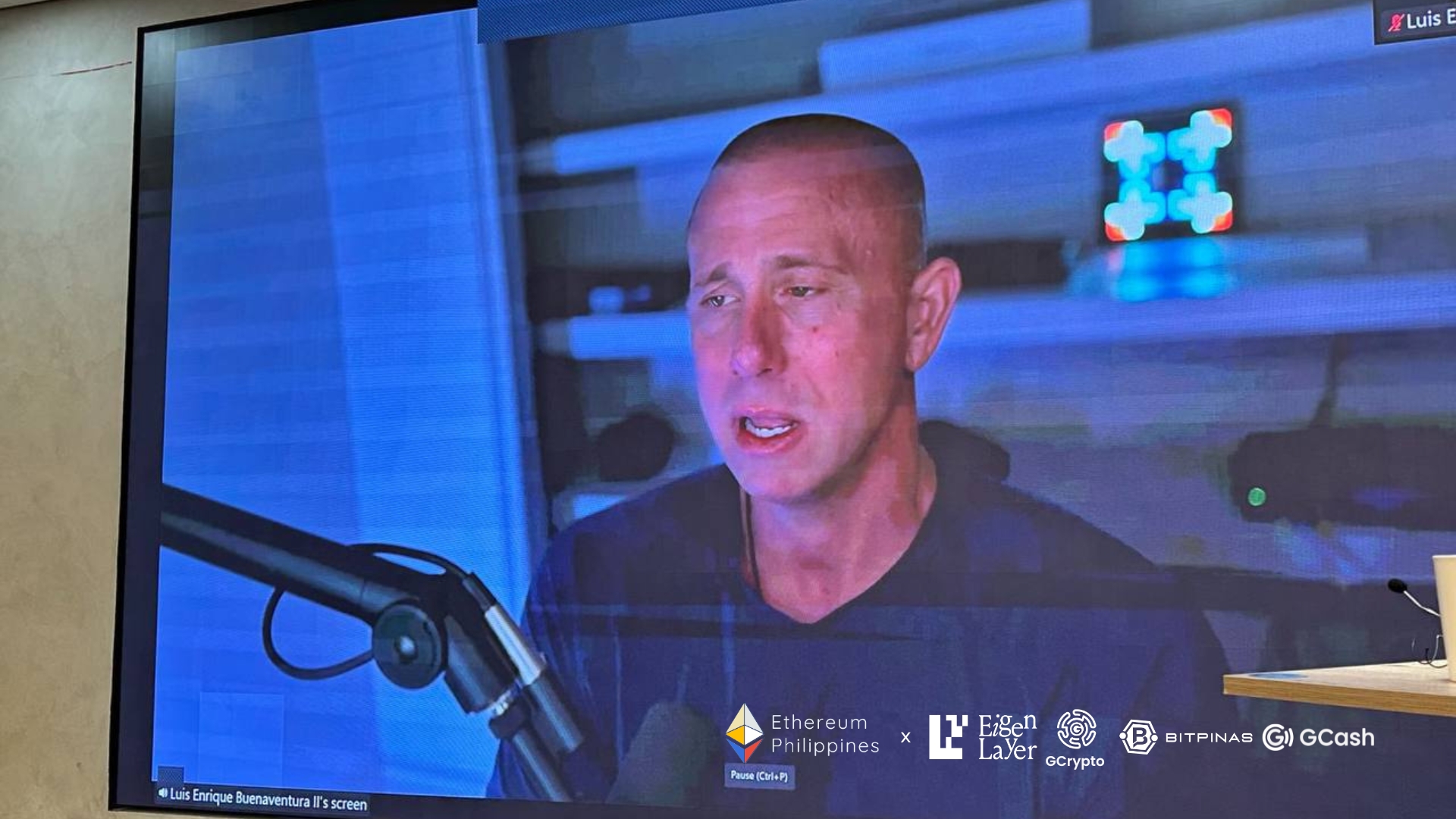
Builders, researchers, and enthusiasts gathered in Manila to explore one of Ethereum’s newest frontiers: programmable trust through EigenLayer.
Builders, Restakers, and New Ideas
Ethereum continues to evolve beyond being just a settlement layer for transactions. With the rise of new infrastructure such as EigenLayer, builders are beginning to experiment with ways to extend Ethereum’s security to entirely new systems. The EigenLayer AVS Dinner hosted by Ethereum Philippines created a space where developers and enthusiasts could learn about these ideas together and discuss what they might enable for the broader ecosystem.
Understanding EigenLayer and AVS
EigenLayer introduces the concept of restaking, allowing Ethereum validators to reuse their staked ETH to secure additional services beyond the base protocol. This design expands Ethereum’s trust layer and opens a new category of applications known as Autonomous Verifiable Services (AVS), which can leverage Ethereum’s economic security while operating as independent systems.
During the dinner, participants explored how these mechanisms work and what kinds of infrastructure could be built on top of them. Discussions covered the role of restaking in securing decentralized services such as oracles, bridges, data availability layers, and other forms of shared blockchain infrastructure.
A Space for Builders to Connect
Beyond the technical discussions, the evening created an opportunity for members of the Filipino Ethereum community to connect with each other and exchange ideas. Developers, founders, and crypto enthusiasts shared perspectives on staking, decentralized infrastructure, and the broader evolution of Ethereum’s ecosystem.
Events like these help bridge the gap between cutting-edge protocol research and the builders who will ultimately experiment with these ideas. By bringing discussions about EigenLayer and AVS into the local community, ETHPH continues to connect Filipino developers to the global conversations shaping Ethereum’s future.
Ethereum’s security layer is expanding—and builders everywhere are learning how to use it.